
Data Governance & Dataset Construction
Category:AI SolutionsPublished on:2026-10-02Views:19140Comments:0#Data Service#Labeling#Governance
The most common reason AI projects fail is not a weak model, but unprepared data. Ordos' industry-investment shortfall list explicitly names "data labeling and governance" for this reason; at the national level, the "Data Factor ×" three-year action plan, the "Model-Data Resonance" action, and the pilot for industry high-quality dataset construction all point to the same thing: make data truly usable in specific scenarios.

I. Service content
1. Data cleaning and standardization
Deduplication, error correction, format unification, missing-value handling, and unit/code unification, ultimately forming reusable data caliber. This layer is the most inconspicuous and the most time-consuming — but it is the premise of everything after. During cleaning we also produce a data dictionary, writing down each field's meaning, range, and source system, to avoid the same field meaning different things in different departments.
2. Data labeling
Text classification, entity labeling, Q&A pair construction, image labeling, with accompanying labeling specifications and sampling mechanisms. Labeling is not "just find people to label"; consistency is the hard part — when two labelers give different tags for the same sentence, the model learns noise.
3. Desensitization and compliance
Sensitive-information identification and desensitization, data classification and grading, meeting the compliance requirements for sharing and external provision. For processing involving personal information and important data, the handling rules and logging requirements are clarified at the planning stage.
4. High-quality dataset construction
Build deliverable, evaluable datasets for specific industry scenarios (e.g., coal safety, chemical processes, cashmere craft). A dataset is not "piling data together" — it needs a clear applicable scenario, labeling specification, quality report, and evaluation method, so the next person can use it directly.
II. How to ensure labeling quality
- Write the spec before labeling: write boundary cases and easily-confused-category rules as examples, not oral instructions;
- Small-batch trial labeling
: first label 100–200 items, cross-check consistency, and revise the spec if it is ambiguous;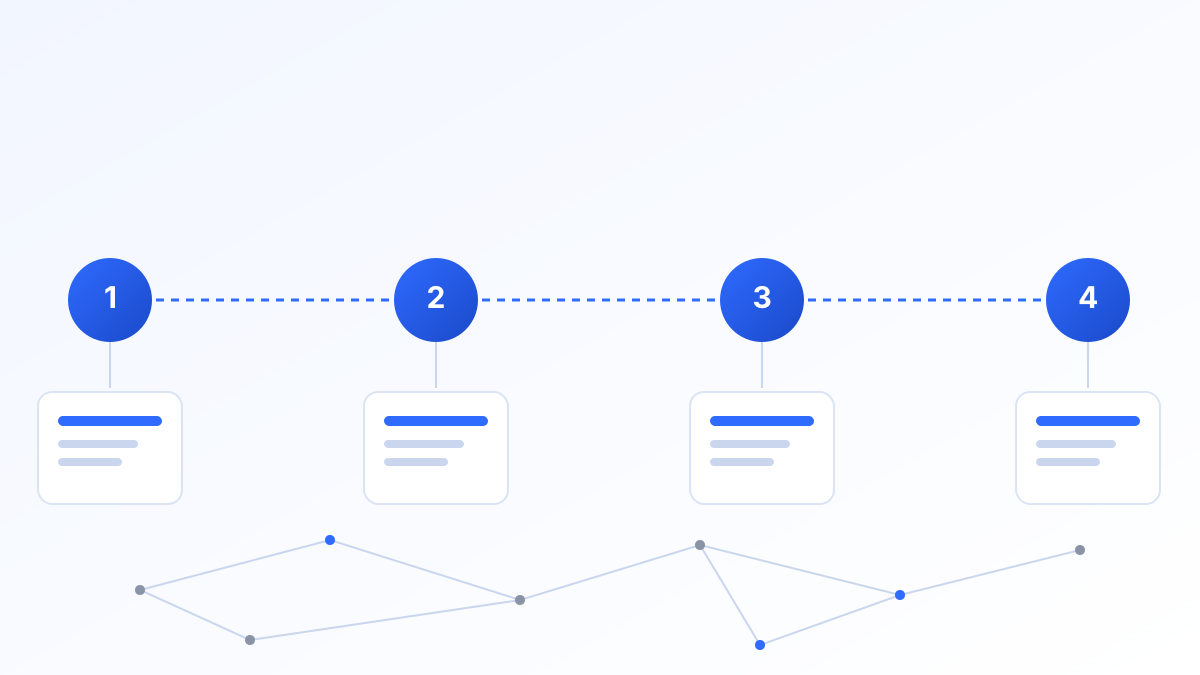
- Sampling and arbitration: sample by batch; if consistency fails, relabel that batch; disputed samples are arbitrated by domain experts;
- Traceable logging: every labeling record logs the labeler and modification history, easing problem location and responsibility division.
III. The four-layer support of a dataset
The common framework for industry high-quality dataset construction can be summarized as "4 libraries + 1 platform"; we organize deliverables along these four layers:
- Data resource layer: aggregation and catalog of data scattered across systems;
- Technical-method layer: tools and process know-how for collection, governance, and labeling, reusable for the next project;
- Standard-specification layer: data dictionary, caliber definitions, and quality standards;
- Dataset-result layer: the datasetitself directly usable for model training or AI applications.
Only with all four layers is the dataset reusable across projects; missing one, it is a one-time delivery file package.
IV. Delivery standards
A dataset delivery must include three things:
- Labeling specification document: category definitions, boundary examples, handling rules;
- Quality sampling report: sampling ratio, consistency results, issue distribution and handling;
- Data dictionary: field meanings, ranges, sources, and update frequency.
Without these three, the dataset is just a pile of files that the next person cannot use — which is why we insist on making them mandatory deliverables. We also provide version management and an evaluation set for later regression comparison.
V. Typical process and timeline
Requirements and scenario confirmation → data inventory and availability assessment → small-batch trial labeling and spec finalization → batch processing and sampling → quality assessment and delivery. Scale determines timeline: small labeling jobs are measured in weeks; projects involving multi-source governance and cross-department coordination are measured in months.
VI. Cost and delivery model
Labeling work can be delivered with local labor at controllable cost; it is also the foundational support we provide for model-type projects — cleaning the data first so model projects don't repeatedly rework.
VII. Boundaries
We do not promise that "a dataset will definitely be monetized or put on the balance sheet". Data assetization involves prerequisites such as quality assessment, compliance review, and rights confirmation; what we can do is prepare the data and documentation to an evaluable and auditable degree, with the final conclusion to be made by professional institutions and competent authorities.
Comments(0)
No comments yet — be the first to share